


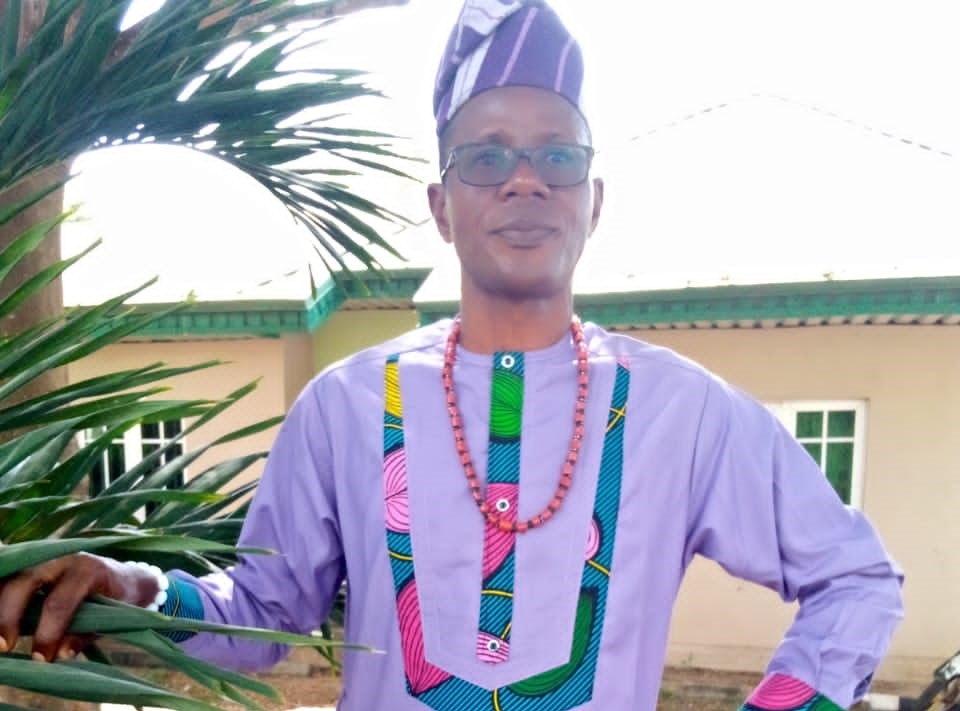

A MEMOIR OF OUR DAYS AT AFRICAN CHURCH GRAMMAR SCHOOL- Oluwaseun Adigun and Oyin Abidoye.
Chief Aderibigbe is an old student of African Church Grammar School Abeokuta,club 88 set.He is an accomplished civil servant of international repute. In this interview,he reeled out all that happened in their days and how those events and happenings have helped him through the journey of life.
The Early Years
The first principal I met when I started school was Chief Fatunbi, in 1983. I later left secondary school in 1988.
When we were in Form 2, during the second term, Chief Ogunwemimo was transferred to our school from Arigbajo High School in Ifo. He stayed with us until early 1988, when he retired. After him, Mr. Somoye took over and remained with us until we graduated.
—
The Building of the School Fence
During our time, in 1984, Chief Ogunwemimo made an effort to build a fence around the school, including the gate, with the support of parents. He summoned all the parents to a meeting. After the meeting, we were gathered in the assembly area, where each of us was called up and asked about our parents’ occupations. Students whose fathers were businessmen were grouped together, as were those whose parents were civil servants, bricklayers, and so on.
Alhaji Akanbi, who was very wealthy at the time, supplied the water used for the fence construction. Most of his children were our classmates. Another contributor was Alhaji Kabiotire, a bread seller from Sabo. His real name was Alhaji Bakare, but people commonly called him Alhaji Kabiotire. Also, Mr. Olaleye, a bricklayer and contractor who lived behind the school, was a major stakeholder in the project. Many other parents followed their lead and donated financially toward the fence. That is how the school fence came to be.
—
The Rhythm of School Life
One of the things that made African Church Grammar School so lively was the bell system. Once the bell was rung, you had to remain completely still, even if you were laughing, you had to freeze with your mouth open, no movement for one minute. At exactly 8 a.m., the bell would ring for assembly. There was also an emergency bell, used when the principal had important information to share.
The first bell of the day was the silence bell. It applied to everyone: students, teachers, and even the principal. Once it rang, you had to be motionless. Anyone who ignored it and was caught by the prefects would be in serious trouble.
During that period, you couldn’t see an African Church Grammar School student outside from 7:25 a.m. onward. By that time, everyone was in their classrooms reading, whether you had an assignment or not, you sat down and read, even if it was a novel. At exactly a few minutes to eight, there would be a warning bell. It was a silence bell; you would hear it just once.
—
The White House and “Form Six” Discipline
The White House was the classroom block used by the Form 5 students of our set. Behind that block was where the goalpost was.
During Principal Ogunwemimo’s era, there was something called “Form Six.” The concept meant that any student who committed an offence, no matter how minor was qualified to enter Form Six. Whether it was for coming late, sluggishness, or noise-making, the punishment involved weeding grass. The teachers in charge of Operation Form Six were Mr. Oyebade and Mr. Saheed. The severity of the offence determined the punishment. Students who committed serious offences were often made to dig gravel. They would fetch the gravel from the field to the hall currently used for WAEC examinations. Before that hall was built, we used to write our WAEC exams in the building in front of the clinic.
—
Sports and Discipline
There were many achievements during Chief Ogunwemimo’s era. He loved sports and hated it when students failed to perform up to expectations. There was a time in 1984 when the African Church Grammar School basketball team played a match at Ijeja. The school was defeated by just a small margin. The next day during assembly, he called out the team and had each of them flogged.
I also remember one time, in Form Two, when some students, those considered “bad” or school touts, were shown their results indicating they had been promoted, but they were advised to withdraw from the school.
—
The Revival of Inter-House Sports
Concerning the sports houses, they were Onatolu, Coker, Fagbemi, and Lakeru. For two years, Red House and Yellow House were leading. In the next two years, Onatolu came up strongly, while Lakeru was always last.
It was our principal, Chief Ogunwemimo, who championed inter-house sports. The tradition had always been there, but it was stopped due to disruptions by touts. However, when our principal came, he brought it back. We were in Form Three when inter-house sports returned. On that day, there were attempts to cause trouble, but Chief Ogunwemimo stood up, calmed everyone down, and assured them that nothing bad would happen. And truly, nothing bad happened.
—
Strict Standards for Teachers and Students
His strictness even extended to the teachers. By 7:30 a.m., all teachers had to be in school. He warned them that any teacher uncomfortable with that rule should seek a transfer. Some teachers sought transfers, while others stayed. That was how he built African Church Grammar School, and every parent wanted their child to attend the school. This was still in 1984.
Chief Ogunwemimo is a man of authority. Even up to the Ministry of Education, they knew him and didn’t want any trouble with him.
—
Academic Excellence: The Golden Best
Then, in 1988, our set was called “The Golden Best” because we recorded the second-best position in WAEC. The following set also won an award. I still remember Professor Omisanjo, who was from our junior set.
Among our set, I know two professors: Professor Ayodeji in Ife and Professor Banmeke in Funab. Most of our set members are now in the ministry. Some have travelled abroad, like Olusola Kayode, Ajiboye Aina, Rotimi Akingbogun, and others. We also have PhD holders, and one of our mates is currently serving as a magistrate judge in Ogun State.
—
Honoring Our Teachers (30th Anniversary)
Years later, because of the achievements of our set, we decided to honor some of our former teachers. On the occasion of our 30th anniversary of leaving secondary school, we celebrated three of them: the late Mrs. Laseyinde, who was our chemistry teacher; Mrs. George, a retired principal from Unity High School, Ago Ika; and Mr. Banjo, who was our biology teacher at the time.
The Federal Government Poultry Project (2014)
Back then, our school supermarket was located beside Chief Oluyemi’s house. Behind the current supermarket was where we had the poultry pen. The poultry farm now situated beside Chief Oluyemi’s house is actually a federal government project, which I helped facilitate. From my office, I represented Ogun Central for the school’s project in Abuja during President Goodluck Jonathan’s administration in 2014. The federal government supported the poultry project at the school, and I anchored it through the Ogun State Agricultural Development Program, under the Ministry of Agriculture.
I received a call that year, asking me to report at Oke Mosan by 7 a.m. the following morning. When I got there, I looked around and saw no one. Eventually, some people arrived, and I asked what was going on. They explained that they were there for the same mission. I learned that a few schools had been selected from Ogun State: African Church Grammar School in Ogun Central, Adeola Oduntola in Ijebu Ode, and Comprehensive High School in Aiyetoro.
When I saw the list, I wondered if Governor Ibikunle Amosun’s connection to the school had anything to do with it, since he was the governor of Ogun State at the time. The project was called the National School Agricultural Program, intended to encourage students to take an interest in farming through the Young Farmers Club. Schools were selected from across the federation, not all states were involved, but Ogun State was one of them.
To God be the glory, African Church Grammar School was the only school that successfully established the project. Other schools only implemented parts of it. Some requested fish ponds and similar items, but African Church Grammar School asked for livestock, specifically layers. The school ran the project for about two to three years before it collapsed due to poor management. When I returned to the school later, I was disappointed to see that it had fallen apart. The federal government had provided the initial funding. After the school had managed it for a few years, I advised them to sell the stock and reinvest in a new batch, which they did before the agricultural teachers were transferred. The last person managing it was Mr. Toriola. I heard there were some other projects sent to African Church Grammar School as well, but I don’t know much about them.
Chief Ogunwemimo is a nice man. He built African Church Grammar School into what it became, and every parent wanted their child to attend. Those were the days.